
Newsletter #6 (2/2026)
A Journey Toward ML-Based Autonomic System Operation in the Continuum
Dear Readers,
As we reach the conclusion of the MLSysOps project, I look back at this journey and what our consortium has achieved over the past three years of collaborative work.
We began with the vision to tackle one of the most pressing challenges in modern computing: managing the vast, heterogeneous cloud-edge-IoT continuum without constant human supervision and intervention. Today, I am proud to say that we have made very significant progress toward this vision. We have successfully developed and evaluated a complete AI-ready framework, spanning the cloud, edge, IoT and even far-edge layers, which supports the end-to-end deployment of hyper-distributed applications in a largely transparent way, and enables autonomic system management at various layers of the continuum via plug-in policies and flexible engagement of ML models, bringing intelligence directly to where data is born.
In this final edition of our newsletter, we report the most recent developments of the project, focusing on the results achieved through the MLSysOps framework in real-world application scenarios: both our use cases, in smart cities and precision agriculture, demonstrate how autonomic ML-driven application and system management can optimize real-world operations, from energy-efficient urban traffic monitoring via smart embedded nodes equipped with cameras, to improved weed detection in the field via the smart engagement of a drone in tandem with a tractor.
We also report on our Hackathon event, which attracted more than 60 participants, and the second edition of our ML4ECS workshop at HiPEAC 2026. Finally, do not forget to check out our recent publications and the large suite of publicly available artefacts (simulators, software, datasets, ML models), which can be freely used by the community.
Thank you for following our progress.
Spyros Lalis
Coordinator of MLSysOps
Real World Impact: The Final Results
AUGMENTA: The Smart Agriculture Use Case
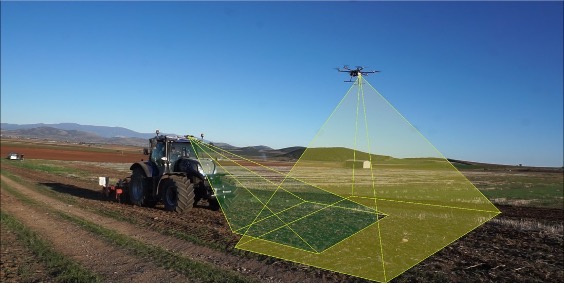
We are proud to present the final results of the Smart Agriculture use case within the MLSysOps project, achieved through extensive field validation and outstanding dedication of our team and collaborators. This use case addressed a key challenge in precision agriculture: maintaining accurate, real-time weed detection under rapidly changing field conditions such as sunlight and shadows.
To tackle this, a tractor and an autonomous drone, both running the same perception system, were deployed to operate cooperatively in real-field conditions. MLSysOps enabled dynamic coordination between the two platforms, allowing the drone to reinforce the tractor’s perception when detection quality degraded and ensuring reliable, targeted spraying throughout the operation.
Final field evaluations demonstrate the impact of ML-driven, predictive decision-making at the edge. MLSysOps agents continuously analyzed telemetry from the tractor and drone to anticipate upcoming degradation in weed-detection performance and proactively engage the drone before performance dropped.
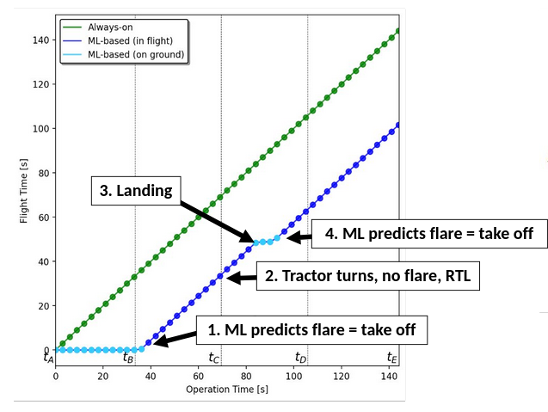
This approach led to a ~49% reduction in tractor “safe-mode” operation (a fallback mode where uniform spraying is applied due to unreliable detection) resulting in a 12% increase in effective operation time compared to tractor-only operation. At the same time, drone usage was optimized by engaging it only when necessary.
Together, these results highlight both the effectiveness of the MLSysOps framework in dynamic, real-world agricultural environments and the strong technical effort behind its successful field validation.
UBIWHERE: The Smart City Use Case
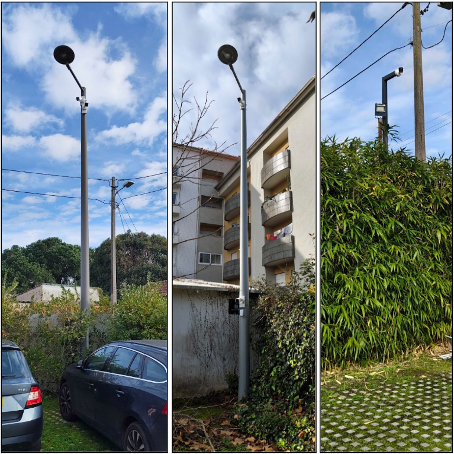
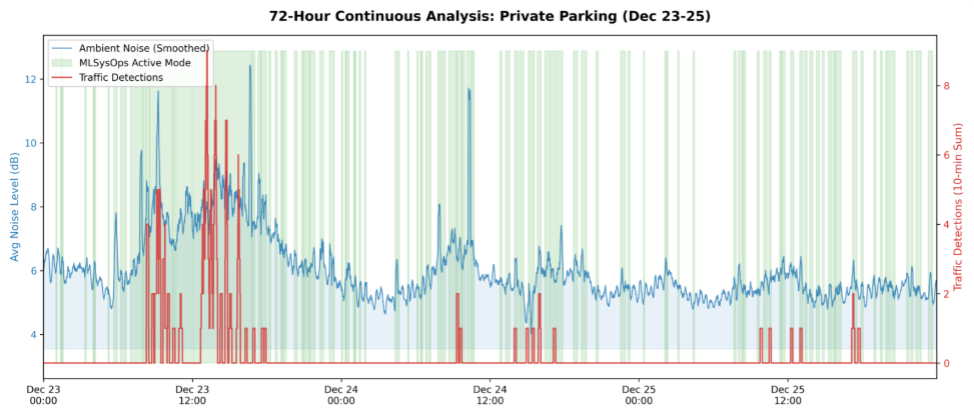
The MLSysOps Smart City application demonstrates intelligent energy management for urban smart lampposts equipped with cameras and noise sensors. Deployed across real-world testbeds in Aveiro, Portugal, the system uses ML models to predict traffic activity from noise patterns, enabling proactive activation and deactivation of energy-intensive computer vision components.
The framework achieved significant energy savings while maintaining detection accuracy: in controlled, low-traffic environments, energy consumption was reduced by up to ~21%, while maintaining a 98.8% vehicle capture rate.
In high-traffic settings, the system prioritized reliability, achieving >99% capture rates with minimal energy savings (~3.5%), demonstrating adaptive behavior based on operational context. The ML-driven policy successfully balances sustainability objectives with safety-critical performance requirements across heterogeneous urban deployment scenarios.
Partner News
AUGMENTA: From Lab to Field Demonstrations
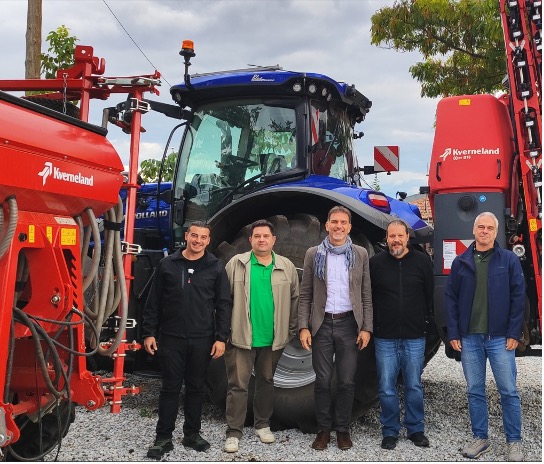
Early outcomes and the MLSysOps vision were presented to our Open Innovation Global Manager, Raule Nicola during a visit to our Athens offices and field-testing facilities in Volos, Greece, including a demonstration of the drone–tractor cooperation enabled by the MLSysOps framework. The approach attracted strong interest for its potential to enhance robustness and scalability in real-world deployments.
UBIWHERE: Showcasing the Smart City Use Case
Aveiro Tech Week 2025
At Aveiro Tech Week 2025, Ana Pereira and Sandra Barnabé led an interactive session titled “MLSysOps in Action: Safer and More Connected Smart Cities.” Visitors explored real-time urban data, witnessing firsthand how the MLSysOps cloud-edge framework creates the scalable, efficient infrastructure necessary for the next generation of smart cities.
Smart City Expo World Congress 2025
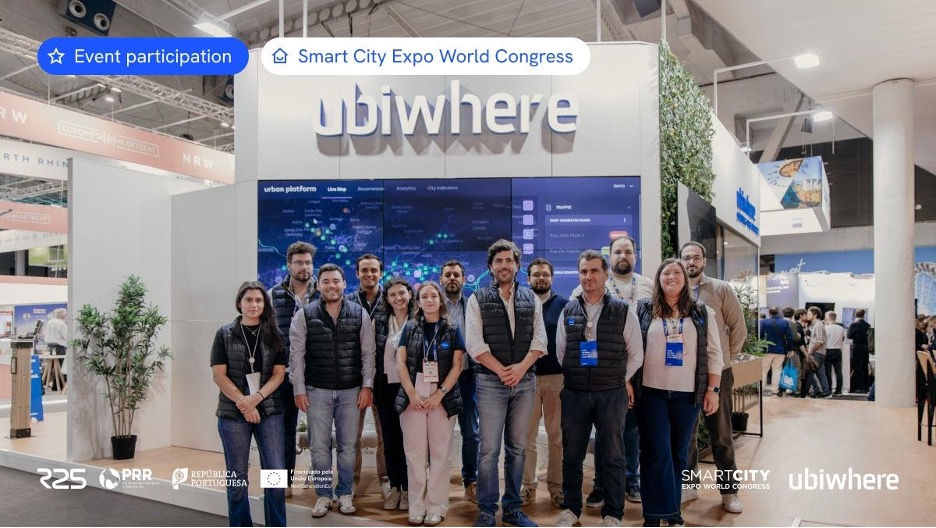
Continuing a decade-long tradition, Ubiwhere served as an Industry Partner at the Smart City Expo World Congress 2025 in Barcelona. Amidst the global conversation on the role of technology, innovation, and sustainability in creating smarter, more efficient cities, Ubiwhere highlighted MLSysOps as a key milestone in their mission to transform the future of cities.
CHOCOLATE CLOUD: Secure Storage for the Defense Sector
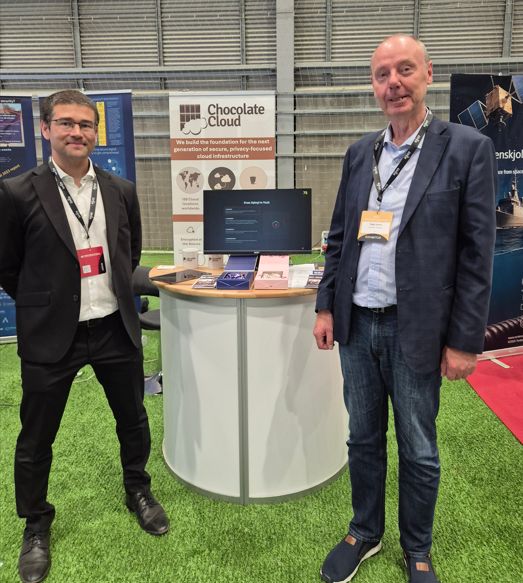
Representing the Chocolate Cloud team, Daniel E. Lucani participated in DALO Industry Days 2025, Scandinavia’s largest defense industry exhibition. At their booth, the team engaged with international delegations and defense leaders to showcase their cutting-edge secure storage solutions. A key highlight was the presentation of their ongoing work within the MLSysOps project, demonstrating how the framework’s autonomic capabilities meet the demands of the defense and logistics sectors.
Events
Highlights from the MLSysOps Hackathon
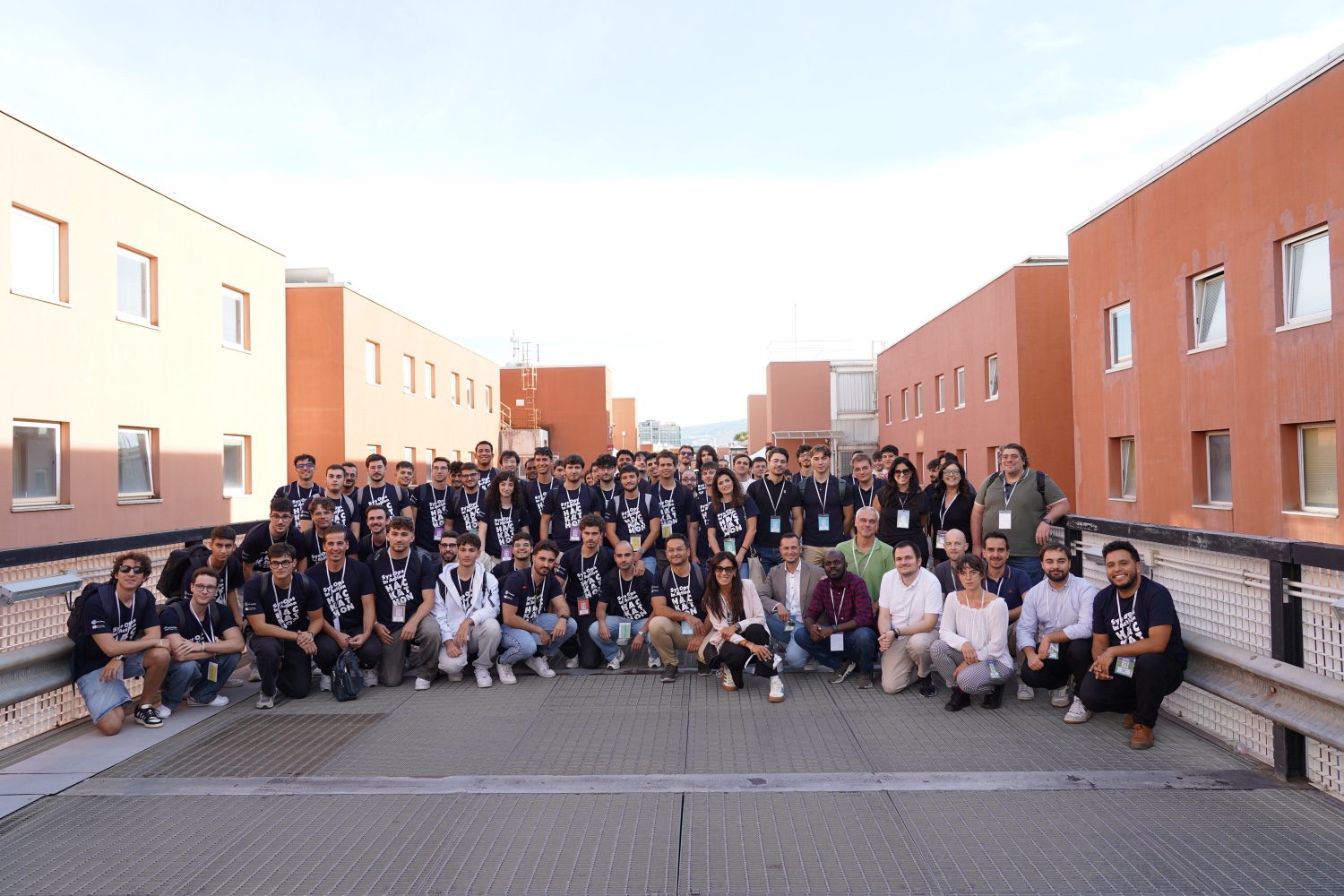
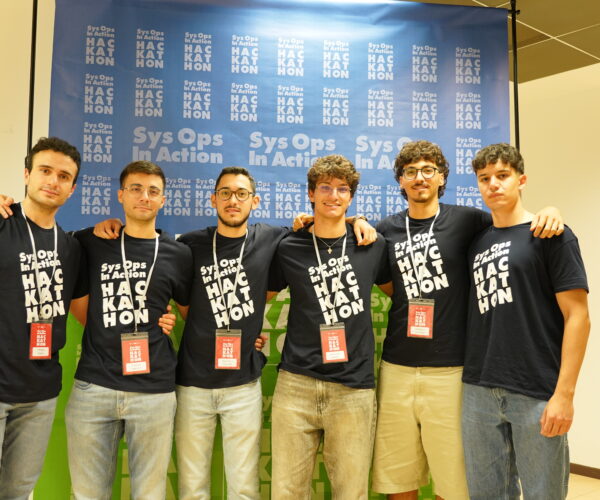
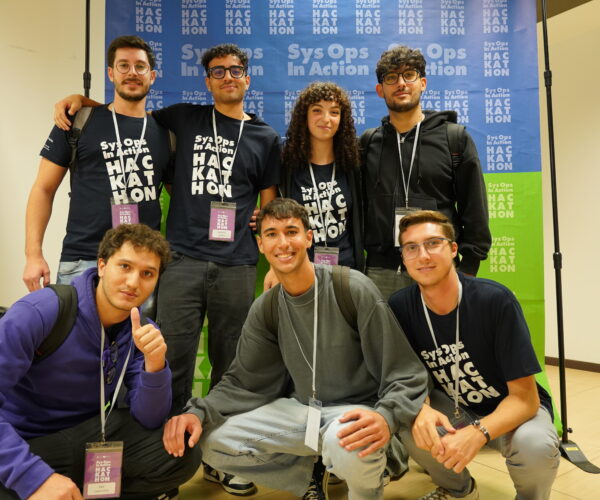
The MLSysOps project recently hosted its flagship Hackathon, “SysOps in Action”, bringing together over 60 students to explore the frontier of autonomous cloud-edge computing.
The participants formed seven teams and worked under the guidance of experienced mentors from across Europe to solve the practical hurdles of designing and applying different policies for cloud-edge continuum computing, with the primary objective of optimizing application performance while reducing operational costs.
At a glance:
- The Talent: 60+ students joined by expert European mentors
- The Structure: 7 teams working in a fast-paced environment
- The Challenge: Balancing application performance with resource efficiency
- The Tech: MLSysOps Framework, built on Kubernetes, Karmada, Grafana and OpenTelemetry
- The Outcome: Seven innovative solutions demonstrating how diverse perspectives fuel technical breakthroughs.
Watch our Hackathon video on [youtube] or read more on [our website]
MLSysOps demonstrates AI-Driven Edge-Cloud Innovations at ML4ECS 2026
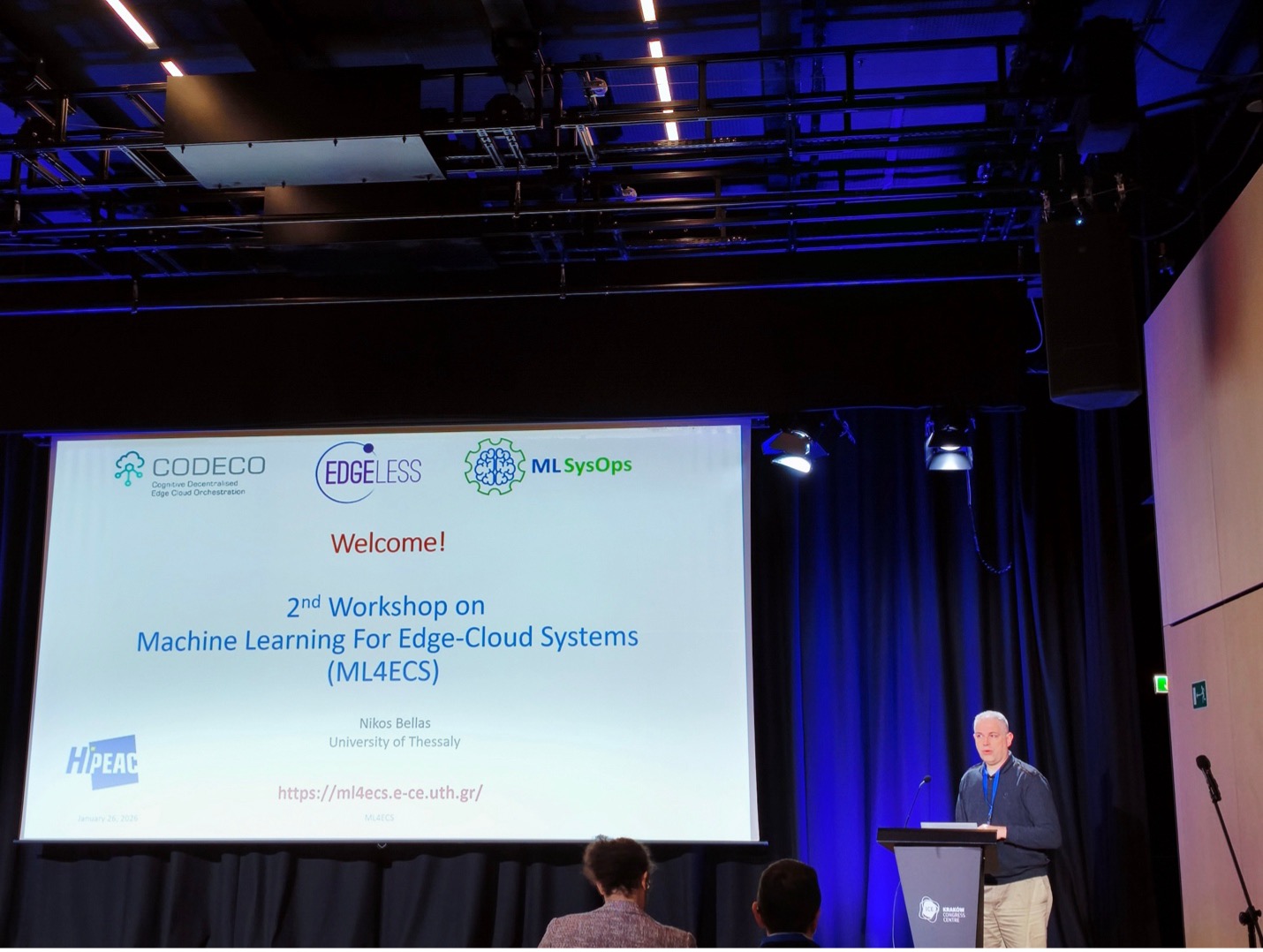
MLSysOps successfully co-organized the 2nd Workshop on Machine Learning for Edge-Cloud Systems (ML4ECS), held on January 26, 2026, in Krakow, Poland, as part of the HiPEAC 2026 conference. Jointly organized with the Horizon Europe projects CODECO and EDGELESS, the event brought together researchers to address the complexities of ML-based autonomic management in the IoT-Edge-Cloud continuum. Profs. Nikolaos Bellas and Raffaele Gravina from MLSysOps co-organized the event.
Dr. Lorenzo Valerio (IIT-CNR) gave the keynote address on “Decentralized Federated Learning Over Edge Networks,” setting the stage for discussions on Agentic AI and coordination-free learning substrates.
The dedicated MLSysOps technical session featured a wide range of presentations demonstrating the project’s technical details, outcomes and impact across multiple domains. Following an architecture overview by Prof. Spyros Lalis (University of Thessaly), partners presented cutting-edge solutions, including:
- Smart Cities & Precision Agriculture: Real-world use cases were showcased by Ubiwhere on smart city analytics and by CNH on drone-tractor collaboration for targeted weed spraying.
- System Optimization & MLOps: Technical deep dives included UCD’s work on AutoML pipelines, Chocolate Cloud’s traffic-aware object storage, and hardware acceleration techniques presented by University of Thessaly (FPGA-based ML inference) and NUBIS (vAccel for hardware acceleration).
6th MLSysOps Plenary Meeting
On September 25-26, the MLSysOps Consortium returned to Rende, Italy for its 6th Plenary Meeting. Hosted by UNICAL, the gathering served as a vital synchronization point as the project entered its final phase.
A major focus of the meeting was the final integration of the project’s two real-world application use cases: Precision Agriculture (AUG) and Smart Cities (UBIW). Partners also reviewed the ongoing ML-related research conducted across the consortium and coordinated the schedule for upcoming project deliverables.
The plenary was also hands-on, with partners conducting extensive testing of the MLSysOps Framework across various system slices. This ensured a stable environment for the “SysOps in Action” Hackathon which kicked off immediately following the meeting’s conclusion.
The event closed with a celebratory dinner, marking a successful final plenary and a moment for the consortium to reflect on three years of shared dedication and innovation.
Publicly Available Artefacts & Deliverables
The MLSysOps project has produced several key artefacts that are openly shared with the community:
- The MLSysOps framework: Our core platform for managing the cloud-edge continuum. [Explore the Framework]
- Simulators/extensions: A suite of specialized tools designed to model complex scenarios such as drone mobility, 5G networking and energy-efficient cloud infrastructure. [Access Simulators]
- ML models/data sets: Access our Zenodo repository featuring trained ML models and operational data sets including system traces and benchmarks used to develop and validate our SysOps solutions. [View Zenodo Records]
For a deeper dive into the technical architecture and evaluation results, you can also browse our Public Deliverables. These documents describe the simulators, the core framework, the work done on ML for various aspects, and the evaluation with focus on the two application use cases of the project. [Browse all public deliverables here]
Publications
- J. Tirana, S. Lalis and D. Chatzopoulos, “Implementation and Evaluation of Multi-Hop Parallel Split Learning,” IEEE Access, 13 Jan. 2026
- Giorgos Polychronis, Foivos Pournaropoulos, Christos D. Antonopoulos, Spyros Lalis. “Using Machine Learning to Take Stay-or-Go Decisions in Data-driven Drone Missions.“ 22nd EAI International Conference on Mobile and Ubiquitous Systems: Computing, Networking and Services (MobiQuitous), 7-9 November 2025, Shanghai, China.
- Jiali Xu, Shuo Wang, Valeria Loscri, Alessandro Brighente, Mauro Conti, Romain Rouvoy. “GANSec: Enhancing Supervised Wireless Anomaly Detection Robustness through Tailored Conditional GAN Augmentation.” 30th European Symposium on Research in Computer Security (ESORICS) 2025, 22-26 September 2025, Toulouse, France.
- João Oliveira, Fernando Rego, Filipe Sousa . “TinyKubeML: Orchestrating TinyML Models on Far-Edge Clusters.” 22nd International Conference on Embedded Wireless Systems and Networks (EWSN 2025), 22-24 September 2025, Leuven, Belgium.
- Mark Doyle, Theodoros Aslanidis, Dimitris Chatzopoulos. “Cooper: A Lightweight Event Recording and Visualization Framework for Data Center Simulations.” 10th International Symposium on Algorithmic Aspects of Cloud Computing (ALGOCLOUD 2025), 15-16 September 2025, Warsaw, Poland.
- Joana Tirana, Andreas Chouliaras, Theodoros Aslanidis, John Byabazaire, Dimitris Chatzopoulos. “Split Learning based GAN training for non-IID Federated Learning.” 10th International Symposium on Algorithmic Aspects of Cloud Computing (ALGOCLOUD 2025), 15-16 September 2025, Warsaw, Poland.
- Ildi Alla, Valéria Loscrì. “Sec5GLoc: Securing 5G Indoor Localization via Adversary-Resilient Deep Learning Architecture.” IEEE Conference on Communications and Network Security, 8–11 September 2025, Avignon, France.
- Jiali Xu, Aya Moheddine, Valéria Loscrì, Alessandro Brighente, Mauro Conti. “SHIELD: Scalable and Holistic Evaluation Framework for ML-Based 5G Jamming Detection.” 20th International Conference on Availability, Reliability and Security (ARES), 11-14 Aug 2025, Ghent (BE), Belgium.
- Nikos Terzenidis, Giannis Patronas, Dimitris Syrivelis, Eitan Zahavi, Athanasios Fevgas, Nikos Argyris, Prethvi Kashinkunti, Louis Capps, Zsolt-Alon Wertheimer, Chen Avin, Julie Bernauer, Elad Mentovich, Paraskevas Bakopoulos, “Programmable Fabrics with Optical Switches in AI Supercomputers“, 30th OptoElectronics and Communications Conference/ International Conference on Photonics in Switching and Computing 2025, 29 June-3 July, Sapporo, Japan 2025.
- Nawaz Ali, Mir Hassan, Ali Hassan Sodhro, Gianluca Aloi, Raffaele Gravina, Giovanni Iacca, Floriano De Rango, “Proximity-Aware Federated Learning for Symbiotic Task Offloading in Vehicular-Edge Intelligence,” 30th OptoElectronics and Communications Conference (OECC)/ International Conference on Photonics in Switching and Computing (PSC), 29 June-3 July, Sapporo, Japan, 2025
- Nawaz Ali, Mir Hassan, Ali Hassan Sodhro, Gianluca Aloi, Raffaele Gravina, Claudio Savaglio, Giovanni Iacca, Giancarlo Fortino, “Decentralized IoT-Edge Computing: An LSTM-Based Federated Learning Framework for Personalized Task Failure Prediction.” IEEE 101st Vehicular Technology Conference (VTC2025-Spring), 17-20 June 2025, Oslo, Norway.
- Nawaz Ali, Gianluca Aloi, Raffaele Gravina, Claudio Savaglio, Ali Hassan Sodhro, Giancarlo Fortino, “FedHeur: Multi-Heuristic Client Selection for Task Offloading in Federated Learning.” 21st International Conference on Distributed Computing in Smart Systems and the Internet of Things (DCOSS-IoT), 9-11 Jun 2025, Lucca, Italy.
- Vincenzo Barbuto, Claudio Savaglio, Giancarlo Fortino, Edward A. Lee. “Edge AI in the computing continuum: Consistency and Availability at Early Design Stages.” 2025 IEEE International Parallel and Distributed Processing Symposium Workshops (IPDPSW), 3-7 Jun 2025, Milano, Italy, 2025.
Consortium

The “MLSysOps” Project is funded by the European Community’s Horizon Europe Programme under Grant Agreement #101092912.
Copyright © 2026, MLSysOps EU Project, All rights reserved.
 Skip to content